The Valley Below the Mountains by Jeremiah Senne
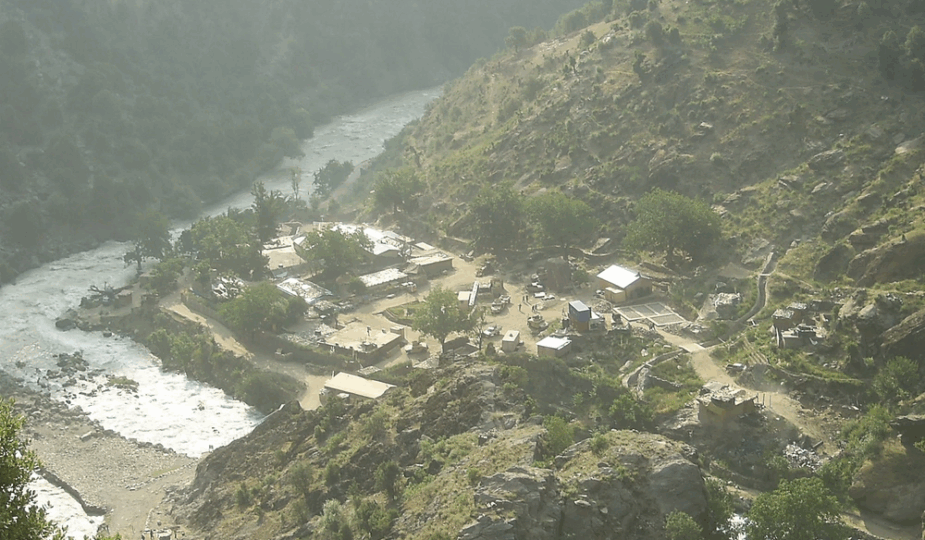
They stood above Combat Outpost Keating like ancient witnesses, dark against the thinning night, their slopes folding into one another until distance and shadow became the same thing. The men stationed there lived beneath them, slept beneath them, carried out their routines beneath them. Every morning they woke to the same stone walls rising from the earth. Every night they watched the ridgelines dissolve into darkness. The mountains were always present. They were impossible to ignore.
The outpost itself seemed almost temporary, a scattering of barriers and buildings settled at the bottom of a valley that did not appear to welcome permanence. By the autumn of 2009, many knew the position was living on borrowed time. Plans had already been made to abandon it. The war was changing shape, and the little outpost tucked into the folds of eastern Afghanistan no longer made strategic sense. Yet soldiers still stood watch there. Radios still hummed. Coffee still brewed before sunrise. Life, even in a place awaiting its own disappearance, continued according to habit.
On the morning of October 3, habit ended.
The first explosions shattered the silence before dawn.
In an instant, the valley changed its voice.
Mortars fell. Machine guns opened from the heights. Rockets crossed the morning air. The attack came not from one direction but many, descending from the mountains that ringed the outpost. What had appeared motionless only moments before suddenly seemed alive. Hundreds of insurgents were moving through the darkness, firing from elevations that overlooked nearly every corner of the camp.
History often remembers battles through numbers. It records how many attacked, how many defended, how many survived. But numbers cannot explain those first minutes.
Numbers cannot capture the disorientation of waking into chaos.
They cannot describe dust suspended in the air after an explosion, or the strange narrowing of attention that occurs when the world becomes too large to comprehend. They cannot convey the feeling of hearing dozens of voices on a radio and understanding only fragments. They cannot measure fear.
Fear is experienced one heartbeat at a time.
Across the outpost, soldiers moved toward defensive positions. Some carried ammunition. Others searched for the wounded. Leaders attempted to impose order upon circumstances that resisted it. The battle did not unfold as a story with a visible beginning, middle, and end. It arrived as confusion. Each person occupied only a small portion of the larger picture. Each knew only what stood directly in front of them.
The mountains remained where they had always been.
Above the gunfire.
Above the smoke.
Silent.
Hours earlier they had appeared beautiful. Now their steep slopes concealed danger. The same landscape that inspired awe also shaped the battle itself. Men fought upward toward enemies they often could not see. The geography of the valley became a participant in the conflict. Stone and earth carried consequences.
As the assault intensified, sections of the outpost burned. Defensive positions were threatened. For a time, it seemed possible that Combat Outpost Keating might disappear beneath the weight of the attack. Yet amid the uncertainty, individual acts of courage emerged. Not the cinematic kind. Not courage free from fear. The quieter kind.
A soldier crossing open ground because someone needed ammunition.
A medic moving toward an injured comrade.
A leader refusing paralysis when others looked for direction.
Acts whose significance became visible only afterward.
The battle lasted for hours.
Eventually aircraft arrived overhead, their presence altering the rhythm of the fight. The defenders regained ground. Positions that had seemed lost were reclaimed. The momentum shifted, slowly at first, then unmistakably. By day’s end, the attack had failed. The outpost remained standing, though barely. Eight American soldiers had been killed. Many more carried wounds that would follow them long after they left the valley.
Years later, the battle would become a matter of history.
Reports would be written. Decorations would be awarded. Questions would be asked about strategy, command decisions, and the wisdom of building an outpost at the bottom of a valley surrounded by higher ground. Those discussions matter. History depends upon them.
But memory is often less concerned with strategy than with people.
What remains are names.
Voices.
Moments of kindness that seemed ordinary before they became irreplaceable.
The valley still exists. The mountains still cast their shadows across the land. Wind still moves through the same passes it crossed long before the battle and long after. Yet for those who were there, October 3, 2009 transformed the landscape forever.
Some places become part of history.
Others become part of those who survive them.